
Upper School
Developing Critical Thinkers
Our Upper School students transition from foundational knowledge to developing critical thinking skills. In Grades 6-8, students engage with complex ideas through analysis, reason, and intellectual argument. They study the role of the Church in founding Western Civilization while preparing for rigorous high school academics through the Socratic method and classical approach.
Upper School Approach
Our Upper School approach develops students’ ability to think critically and engage with complex ideas. Through analytical methods, rigorous academics, and continued character formation, we prepare students for success in high school and beyond while deepening their understanding of Catholic truth.
How We Develop Critical Thinking
Our Upper School students learn through analysis, reason, and intellectual argument—methods designed for minds ready to engage with cause and effect relationships. Students in Grades 6-8 move beyond foundational knowledge to examine ideas, make connections, and develop sophisticated thinking skills.
This approach challenges students to think critically while remaining rooted in truth. We encourage intellectual curiosity and rigorous analysis while immersing students in the great ideas that have shaped Western civilization. Every lesson builds the analytical skills students need for success in high school and college.
Academic Excellence Rooted in Catholic Truth
Our curriculum engages students with the great ideas of Western civilization through a Catholic lens. In Religion, students encounter Scripture, doctrine, and heroic examples through New Testament studies, Baltimore Catechism, saints’ lives, Confirmation preparation, specialized spirituality programs for boys and girls in 7th and 8th grades, virtue development, and liturgical year celebrations.
Language Arts develops through formal grammar and writing, summaries and essays, sentence diagramming, Socratic Circle discussions, and poetry analysis. Our abstract approach to Mathematics covers percents and ratios, pre-algebra, and Algebra I with advanced problem-solving.
We integrate Humanities by studying the Ancient World to the Middle Ages, focusing on the role of the Church in founding Western Civilization, with literature texts that align with historical eras and geography of regions. Science emphasizes earth, life, and physical sciences through lab science, science fair projects, the scientific method, and the development of sciences by Catholic figures, plus nature studies. Latin advances to conversational Latin, Latin grammar, translation, and parallel analysis of English and Latin grammar with sentence diagramming.
Developing Character and Excellence
Character formation continues through age-appropriate virtue development and understanding of developmental traits. Students ages 11-14 experience significant growth and challenge—climbing steep hills where life feels like a struggle, reaching peaks of enthusiasm and readiness for middle school, then navigating withdrawal and uncertainty as they become more independent from family while finding bright spots in friendships. They develop high ethical standards and learn to argue constructively rather than just for argument’s sake, making this an excellent time for Socratic Circle discussions.
Students ages 13-15 cultivate modesty, moderation, simplicity, sociability, friendship, respect, and patriotism. Our approach gives challenging but reasonable targets, helping students develop the character and intellectual habits they need for faithful living and academic success.
Our Fine Arts program introduces various media, skills, and techniques appropriate for each age group while incorporating the liturgical year throughout. Fine Music includes rhythm and music theory, folk music, patriotic songs, seasonal and religious songs and hymns, chant, study of the orchestra, composers and eras, and group and choral singing. Physical Education develops skills, teamwork, and sportsmanship.
Here to serve.

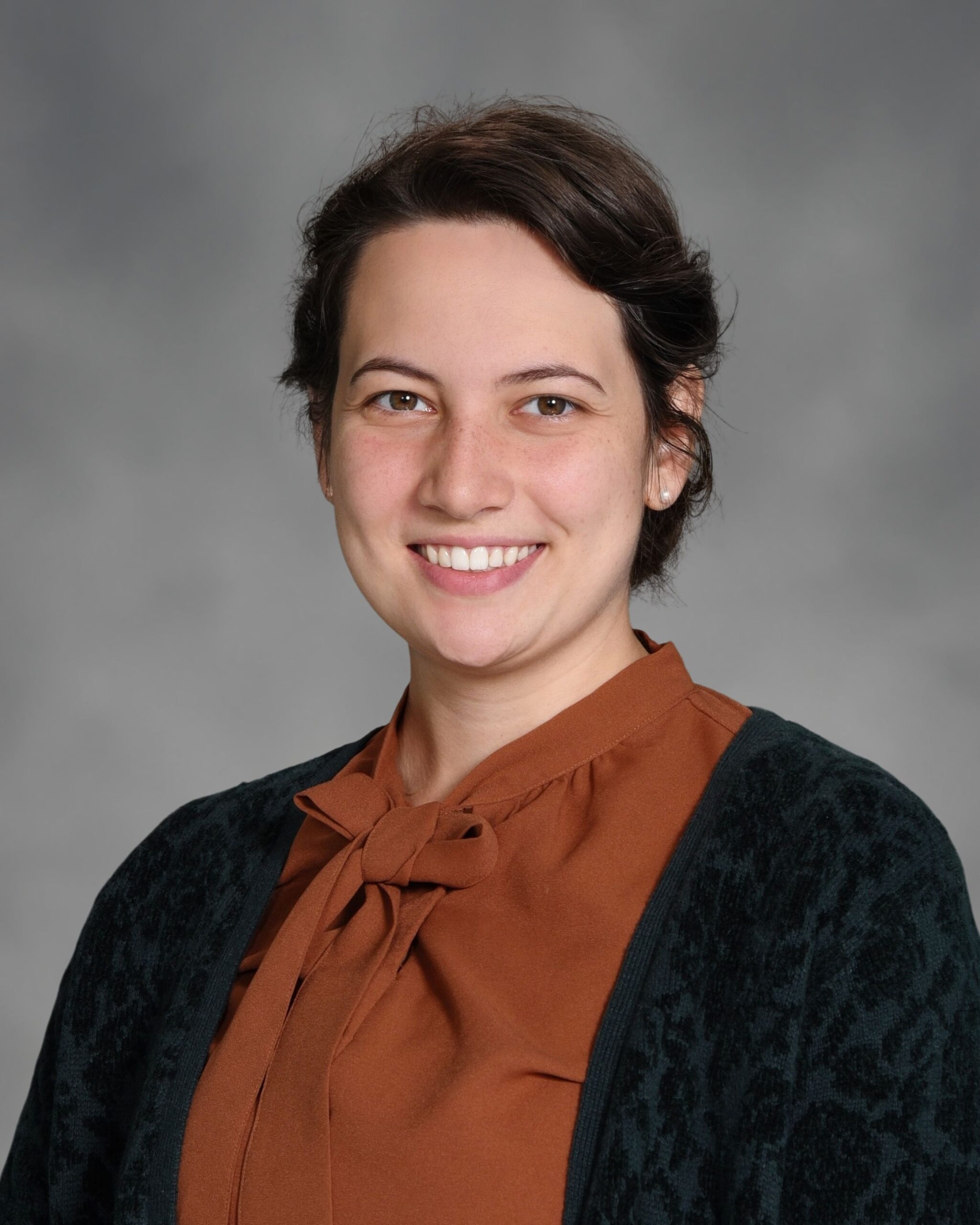
Madeline Eastman
Sixth Grade Teacher
Hello, my name is Madeline Eastman, and I have been living in Durham Township with my family since we moved to Pennsylvania in the summer of 2016. I was privileged to receive a beautiful Catholic homeschool education which began for me an enthusiastic love of learning. In 2024 I graduated from the Thomas More College of Liberal Arts in New Hampshire and Rome, where I studied the great books of Western culture, theology, philosophy, and lots of Latin! This past year I began my teaching adventure as an English teacher for a Catholic Classical elementary school in Slovakia. In addition to books, I enjoy gardening, music, hiking, and good cheer with friends.

Fr. Jose Marie B. Legaspi
Seventh Grade
Fr. Jose Marie B. Legaspi brings over 35 years of experience in pastoral ministry and Catholic education in both the United States and the Philippines. He holds degrees in Sacred Theology, Philosophy, and a Master’s in Instructional Technology and Media from Teachers College, Columbia University.
Since 2021, Fr. Legaspi has been part of the faculty at The Regina Academy, where he teaches science and math. Rooted in the Salesian tradition of St. John Bosco and deeply committed to the Church’s mission of education, Fr. Legaspi helps students encounter the unity of faith and reason. His teaching reflects the classical Catholic vision of education—one that seeks to cultivate wisdom, virtue, and a love for truth, beauty, and goodness in the hearts and minds of students.
In addition to his pastoral work, Fr. Legaspi has guided and trained educators at all levels, focusing on faithful, effective teaching rooted in Catholic pedagogy. He brings a unique ability to integrate sound doctrine, rigorous academics, and pastoral care, forming students not only intellectually but spiritually.

Jacqueline Lenox
Eighth Grade Teacher & Dean of Academics
Family: Our family has been blessed with three sons and eleven grandchildren.
Education: Chestnut Hill College – Elementary Education
Educational Experience: Kindergarten and Grades 3 – The Regina Academy – 12 years. 35 years of teaching experience. Presently teaching Gr. 7 Latin and English; Gr. 8 Religion, Latin, English, and the Humanities
From the book Christian Education by Blessed Basil Anthony M. Moreau, he wrote about:
“. . . the formation of the hearts of young people and the development of a positive response toward Religion within them.” This quote speaks of the joy and love of teaching – a vocation that calls teachers to help in the formation of young souls on their journey to the ultimate goal – to be happy with God in heaven. Through the love and care that I have for children, I will encourage their hearts and minds to seek all that is true, good, and beautiful – all that God has created. Every human story—a child’s life—is a fascinating story and we should respect it as a beautiful gift.
My goal at the Regina Academy is to continue to instruct our children in the ways of our faith. Knowing that parents are the primary educators of their children, I will strive to build a partnership with parents and students that will allow the children to grow in wisdom and grace; to become all that God has created them to be. In the classroom, students will come to understand the words of St. Francis—“Preach the Gospel at all times, and when necessary, use words.” I will encourage the children to be His instruments in the world. And as St. Catherine of Siena tells us, “If you are what you should be, you will set the world ablaze.”
Interests: Spending time with my family, especially the grandchildren; Reading, Gardening
“See Christ in everyone you meet.”
Mrs. Luna holds a B.A. in Modern Languages and a Master of Education in Teaching English as a Second Language from Seton Hall University. She is passionate about guiding young children through their first school experiences, helping them grow into confident, courteous, and joyful learners—instilling in them a deep respect for one another and a sense of reverence and awe for God and His creation.
Before pausing her career to raise her three children, Mrs. Luna taught in several preschools across New Jersey and Pennsylvania. She later returned to the classroom at the Regina Academy at St. John the Baptist (RASJB), where her own children were students. There, she became a certified Montessori educator for children ages 3–6 and was instrumental in launching RASJB's Montessori preschool program.
A devoted parishioner and Eucharistic Minister at St. John the Baptist, Mrs. Luna brings both faith and joy into every aspect of her work. In her free time, she enjoys cultivating her butterfly garden—drawing on the wealth of knowledge she gained from Mrs. Elsner's beloved nature walks.

"At Regina, everything we learn ultimately leads us closer to Christ.”
test
Eli, Class of 2022
"Here, we learn to think for ourselves in the light of Christ.”
test
Catherine, Class of 2022
“Classical education at Regina teaches us to persevere, master what we learn, and find joy in the process.”
test